ServicesRoof Replacement
Roof Replacement in Carson Built to Be Cared For
When repairs stop holding, we replace the roof from the deck up. We use sound decking, new underlayment and flashing, and a finish that is simple to look after. The new roof should need only modest upkeep for a long time to come.
Knowing When Replacement Beats Another Patch
A sound roof can often be kept going with repairs, and we will tell you plainly when that is still the case. Replacement earns its cost when the underlayment has dried out on every slope, when shingles shed granules everywhere instead of in one spot, or when each fix turns up two more problems.
Here, steady sun is the slow enemy. Ultraviolet light bakes asphalt shingles brittle and breaks down the felt beneath tile, long before the surface looks worn out. Winter rain then finds those weak layers. By that point, patching only moves the leak to another spot.
We plan a replacement around how the roof will be maintained afterward. That means clean flashing details you can inspect, ventilation that keeps the attic from cooking the shingles, and a written record of what went on your home.
Everything That Goes Into the New Roof
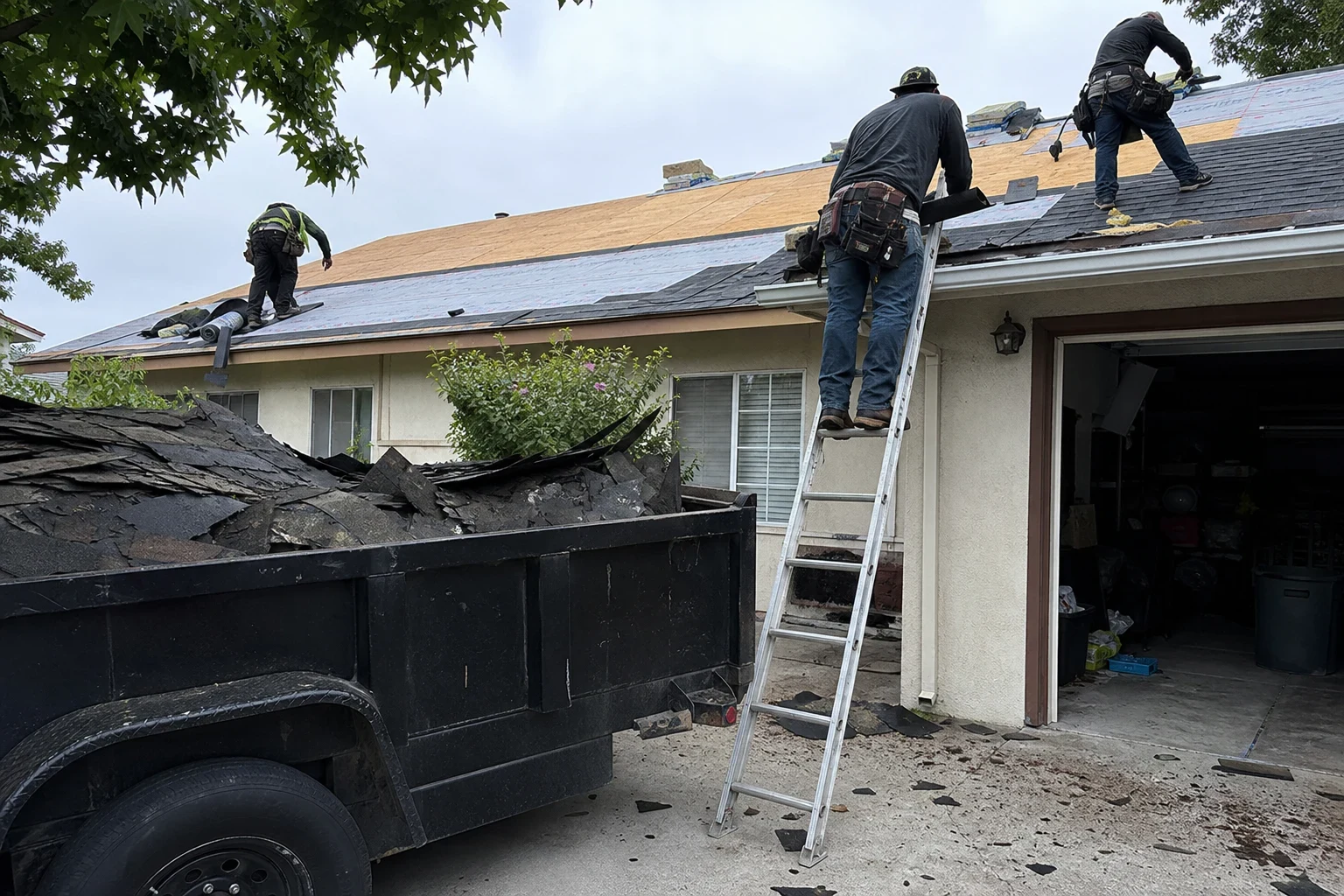
- Old roofing stripped to the sheathing
- We take off every layer instead of nailing new material over the old. With the deck bare, each soft or stained board is visible before anything new is fastened down.
- Decking repair where it is needed
- Rotted or delaminated plywood and old plank sheathing are replaced. We photograph what we find and show you before adding it to the job.
- New underlayment and flashing
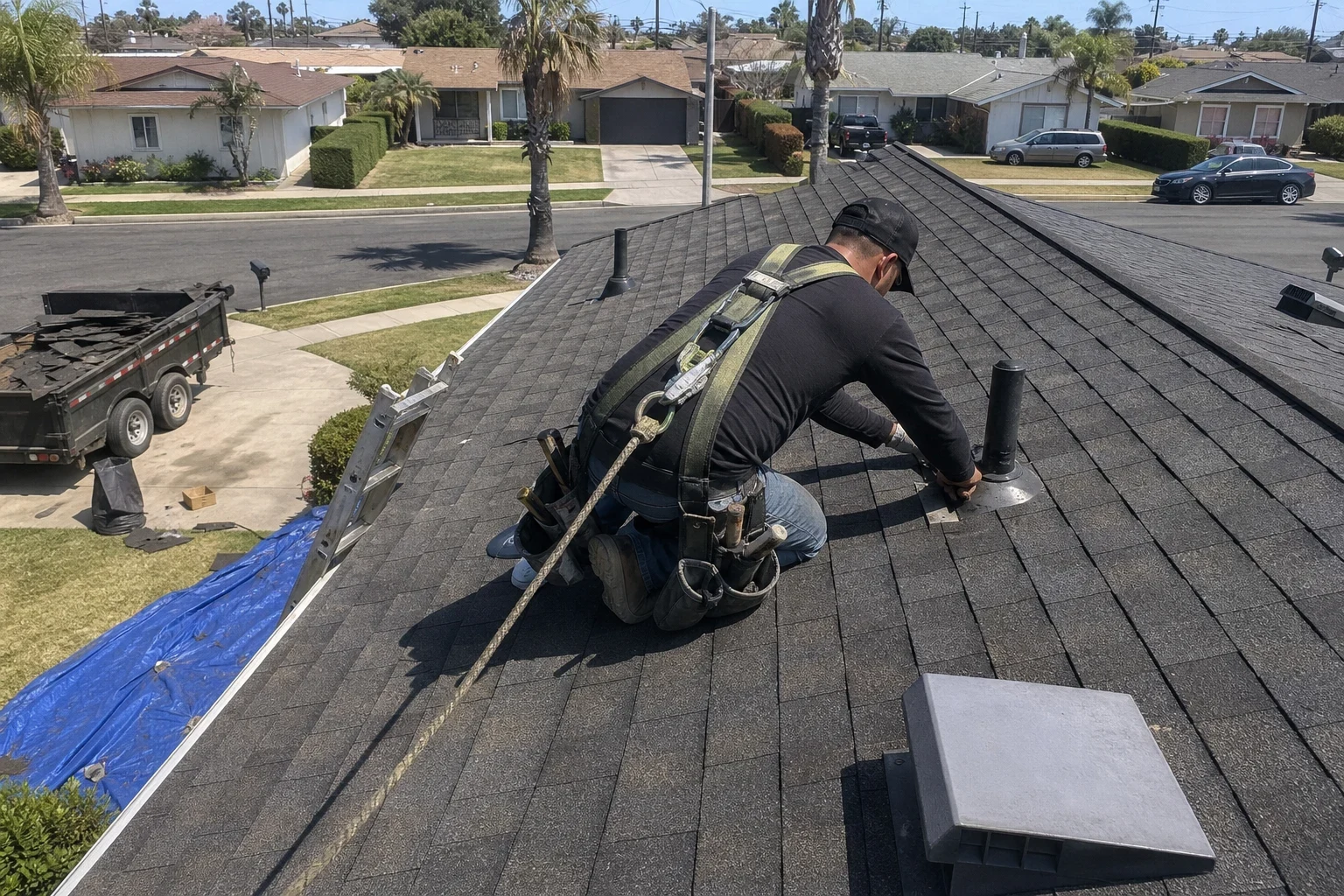
- Fresh underlayment goes over the whole deck. We add new drip edge and new flashing at walls, chimneys and vents, because reused metal is where many new roofs leak first.
- Ventilation checked and corrected
- We look at intake and exhaust together. Balanced airflow keeps attic heat off the underside of the roof, which helps shingles age slowly.
- Material choices explained
- We walk you through asphalt shingle roofing and tile roofing, including how each weathers and what upkeep it asks of you. You choose with the tradeoffs in front of you.
- Permit, inspection and cleanup
- We pull the permit and meet the inspector. We also magnet-sweep the yard and driveway for nails before we leave each day.
Warning Signs a Roof Has Reached Its End
Grit collecting in the gutters
A little after a heavy rain is normal. Thick drifts of granules, along with bare or shiny patches on the shingles, mean the protective surface has worn away.
Curling or cracked shingles across slopes
One damaged slope can be repaired. When edges are cupping on every side, the material has reached the end of its life.
Repeated leaks in new places
If roof leak repair keeps finding fresh entry points, the underlayment beneath has likely failed broadly.
Sagging or soft spots
A dip along the roofline or give underfoot usually means wet decking. Pushing that off only lets the damage spread.
Slipped tiles and worn felt
Clay and concrete tiles can outlast several underlayments. When the felt below is brittle, the tiles come up and go back down over new layers.
How a Replacement Unfolds
- 1
Free inspection and written estimate
We walk each slope, check the underside of the deck from the attic and record its condition in pictures. You get a written, line-item estimate that separates the core job from any decking allowance.
- 2
Permit and scheduling
We file the permit with the local building department and set a start date during a dry stretch. You will know when materials arrive and when the crew starts.
- 3
Protecting your home
Tarps go over landscaping, the driveway and anything near the walls. Attic belongings under the work area should be covered or moved, and we will point out which ones.
- 4
Tear-off, deck and install
We strip and dry-in the roof in workable portions, so nothing is left exposed when the crew leaves for the evening. Decking repairs, underlayment, flashing and the finish roof follow in order.
- 5
Final inspection and walk-through
After the city inspection, we walk the property with you, show you the details that matter for upkeep, and hand over photos of the work.
What Moves the Price of Replacement
We put a price on a replacement only after measuring the roof and seeing its condition, which is why we won't give a number over the phone sight unseen. The written estimate breaks the job into line items, so you can follow where your money goes. Financing is available through Service Finance Company, subject to credit approval.
- Size and pitch
- Square footage drives material and labor. Steep slopes need more safety setup and move more slowly.
- Layers coming off
- Removing two layers of old shingles takes more labor and disposal than removing one.
- Decking condition
- Hidden rot is the most common change once tear-off starts. We price it per sheet in advance so there is no guesswork.
- Material and details
- Tile, architectural shingles, skylights, chimneys and multiple valleys each add time and materials.
- Permit and code items
- Permit fees and any energy code or ventilation upgrades required for the reroof are included and shown on their own lines.
Roof Replacement Questions
Something not covered here? (310) 982-2274
How many days will the crew be at my house?
A typical shingle reroof wraps up in a handful of working days after tear-off begins. Tile, a steep pitch or a lot of rotted decking will stretch that. Your estimate comes with a realistic schedule, and we let you know right away if rain pushes a day back.
Can you put a new roof over the old one?
Code sometimes allows it, but we recommend a full tear-off. Layering hides soft decking, adds weight and usually shortens the life of the new roof. Starting from the deck is the better base for long-term care.
Does someone need to stay home while you work?
Only at a couple of points. We ask to see you on the first morning to go over the plan, and again for the final walk-through. Inside, expect hammering and some vibration, so taking pictures and mirrors off the top-floor walls is a good idea.
Will insurance pay for a new roof?
It depends on the cause. Sudden storm or hail damage is often covered, but age and wear usually are not. We work directly with your insurance claim by documenting the damage and meeting the adjuster, while the coverage decision stays with your insurer. See our storm damage repair page for more.
Should I repair or replace?
If the damage is limited and the rest of the roof has life left, we will recommend roof repair. A roof inspection with photos will show you which side of that line your roof is on.
Start With a Look at Your Roof
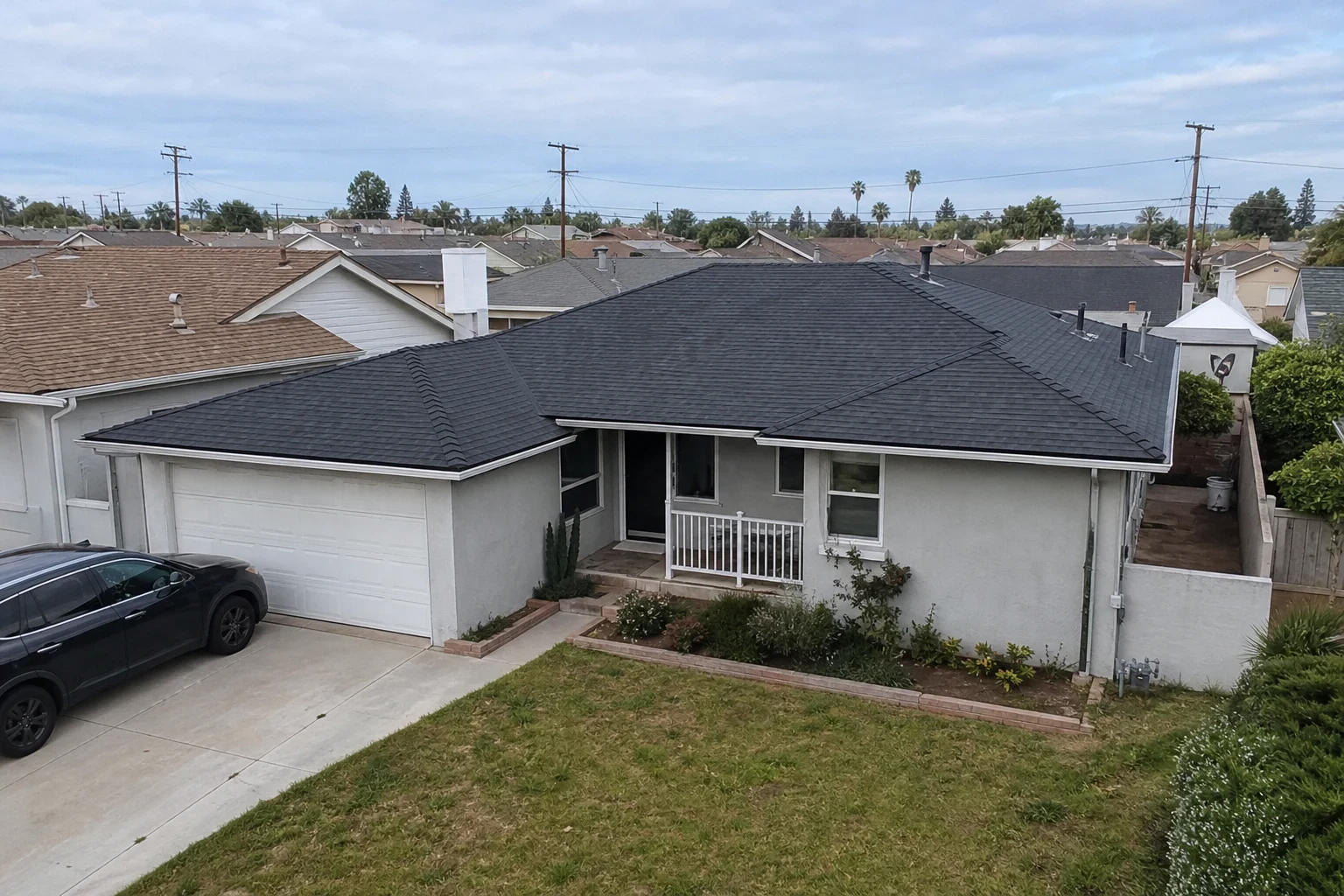
We will inspect the roof, show you photos and tell you plainly whether it is time to replace it. If it is, you get a written estimate to keep and compare.