ServicesHail Damage Repair
Carson Hail Damage Repair
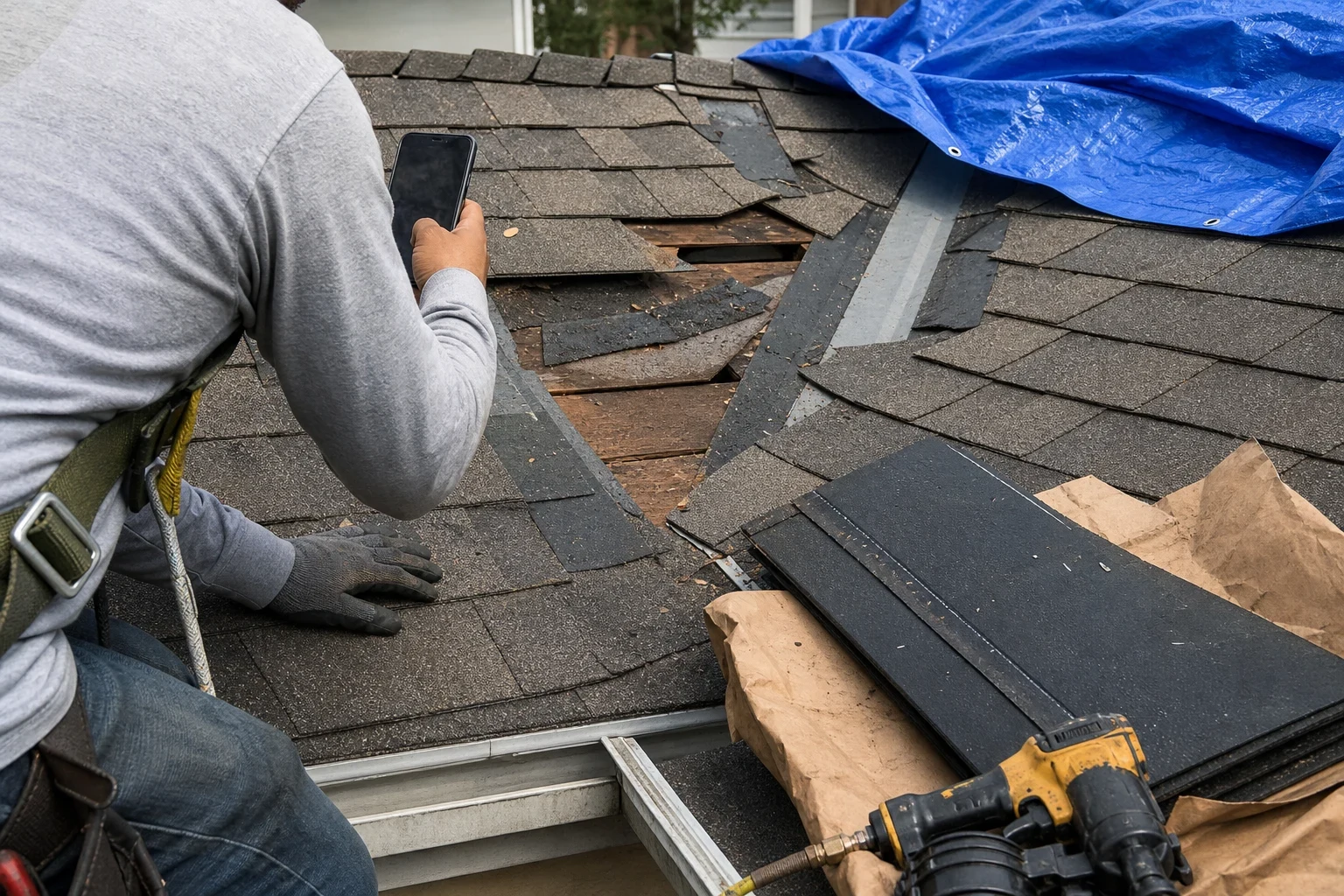
Most hail damage can't be spotted from the street. Stones bruise shingles, strip away granules and split tile, and from then on the roof wears out sooner. We track down every hit, share the photos with you and make the repairs, so the roof keeps all the years it was built to give.
Small Impacts, Long Consequences
A hailstone hitting asphalt shingles can crack the fiberglass mat under the surface while the shingle still looks fine. Those bruises lose their protective granules over the following months, the asphalt underneath bakes in the sun, and a roof that had years left starts wearing out early. On tile, a single cracked piece lets water reach the underlayment, which was never meant to take direct rain.
Hail is not an everyday event in Carson, so damage often sits unnoticed until a winter storm finds it. Our view is simple: catch it early, repair what was hit, and keep the rest of the roof in service. Most hail visits end with targeted repairs rather than a new roof, and we tell you plainly which one your roof needs.
What Our Hail Repair Covers
Shingle-by-shingle check
We walk each slope and press-test suspect spots. Bruises feel soft, like a bruise on fruit, and we mark every one we find.
Tile assessment
Cracked, chipped or shifted clay and concrete tiles are lifted and replaced. We check the underlayment beneath any broken piece before closing it back up.
Metal and flashing
Vent caps, ridge vents, flashing and skylight frames dent easily and can open seams. We repair or replace the pieces that no longer seal.
Gutters and downspouts
Dented gutters drain poorly and pile up loose granules. We clear them, note the damage and fix sections that no longer carry water away, with more detail on our Gutters page.
Photo record
You get clear photos of each impact we document, useful for your own records and for an insurance claim.
Signs Hail Has Reached Your Roof
- Granules in the gutters
- A handful of grit after a storm is normal. A heavy layer that looks like coarse sand usually means shingles took hits.
- Dents on soft metal
- Look at your downspouts, mailbox or AC unit fins. Fresh dents there are a good sign the roof was struck too.
- Dark spots on shingles
- Round, dark patches where the granules are gone often mark a bruise. They can be hard to see from the ground, which is why a close look matters.
- Cracked or broken tile
- Tile pieces on the ground or visible cracks near the ridge and edges call for a closer inspection before the next rain.
- A new stain indoors
- A ceiling stain weeks after a storm can trace back to a cracked shingle or tile. Our Roof Leak Repair service handles that side of it.
How a Hail Repair Job Runs
- 1
Start with a call
Tell us when the storm hit and what you have noticed, like dents in a downspout or grit piling up in the gutters. Then we set a free inspection at a time that fits your schedule.
- 2
A photographed inspection
On the roof we chalk-mark every impact and take a picture of it. Before leaving, we go over the findings with you, including what does not need attention yet.
- 3
Your estimate and help with a claim
Every repair is listed on a free written estimate. If you open a claim, we work directly with your insurance claim and give the adjuster our photos, while your insurer makes the coverage decision.
- 4
The repair
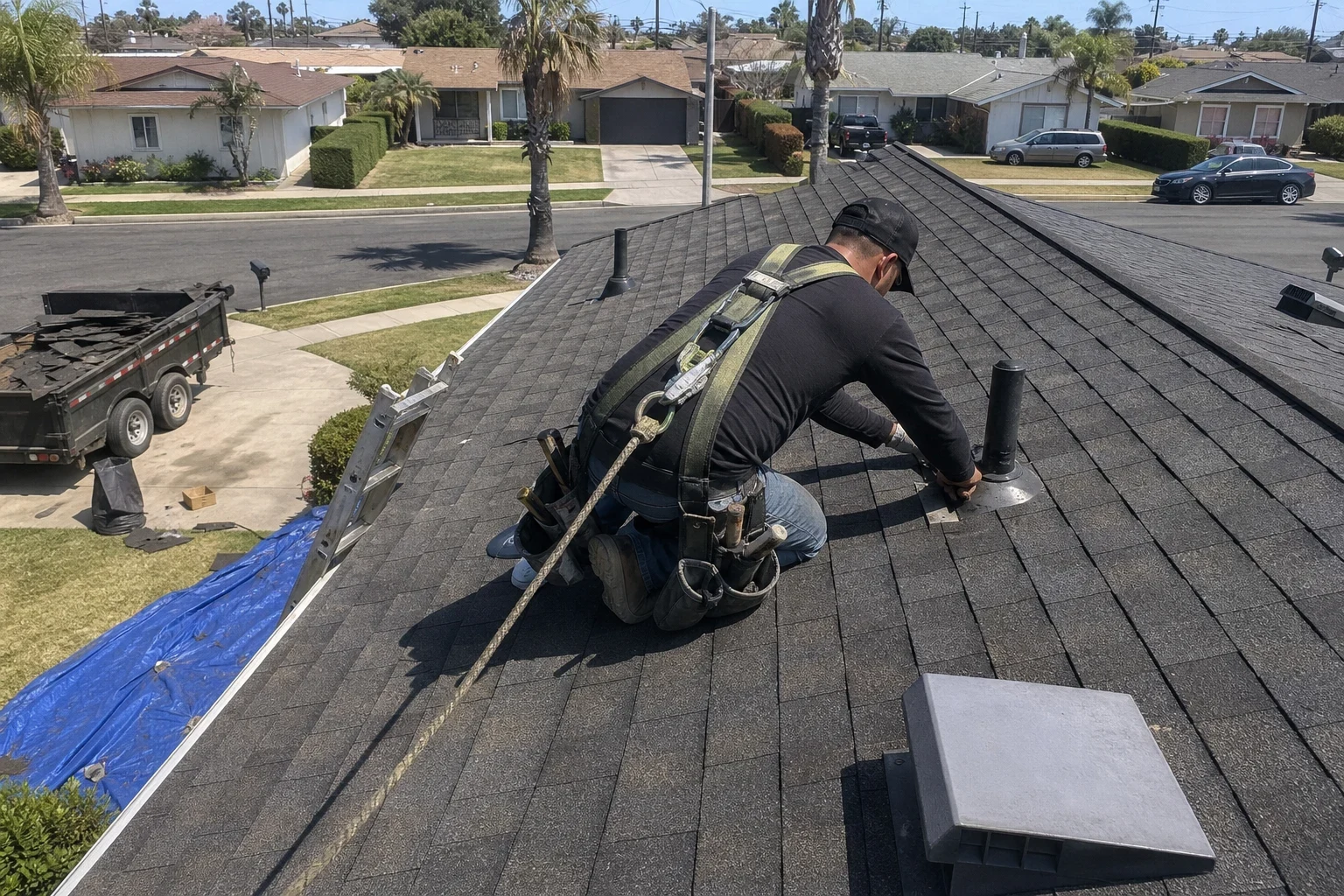
Plants and walkways get covered first. We then swap out damaged shingles, tile and metal and seal each spot so it matches the roof around it. A magnet sweep picks up nails and debris before we leave.
- 5
A last check
We look over each repaired spot once more and send you pictures of the completed work.
What Sets the Price of a Hail Repair
We price hail work from the hits we actually find, so every estimate is different. Each item gets its own line in writing, and you can see exactly what you are paying for. Financing is available through Service Finance Company, subject to credit approval.
- How much of the roof was hit
- Scattered bruises on one slope take little time. When every slope shows impacts, we may end up talking about replacing part or all of the roof.
- The material on your roof
- Older shingle colors and tile profiles that are no longer made can take longer to track down. Tile also has to be handled gently so the pieces around it stay whole.
- The layers below
- When water has already gotten into the underlayment or decking, we fix those layers first, before any new surface material goes down.
- Flashing, vents and gutters
- Flashing, vent caps and gutters that were dented badly enough to stop sealing or draining add to the work.
Common Questions About Hail Damage
- Nothing looks wrong from the ground. Is an inspection still worth it?
- It is if hail fell at your home or you see dents on metal nearby. Hail bruises usually show only at close range, and some can only be felt by hand. The inspection is free, so checking costs you nothing.
- Does homeowners insurance cover hail repairs?
- Plenty of policies include hail, though deductibles and terms differ and some limit how long you have to file. Read your policy shortly after the storm. We work directly with your insurance claim and supply photos, while the adjuster and your insurer decide what is covered.
- Will the new shingles or tile match what I have?
- We hold samples up to your roof to compare color and shape, and a close match is usually within reach. When a product has been discontinued, we go over the choices with you before starting.
- Does hail mean my roof has to be replaced?
- In most cases, no. Scattered hits get repaired one piece at a time, and the rest of the roof stays in service. When heavy damage covers the whole roof, we show you the evidence, and our Roof Replacement page describes that path.
Let Us Look Before the Next Rain
A short visit tells you whether hail touched your roof and what it takes to put it right. You get photos and a free written estimate, with no pressure to decide on the spot.