ServicesFlat Roofing
Flat Roofing in Carson With Upkeep Planned From the Start
A flat roof lasts when water leaves it quickly and the seams stay tight. We repair, recoat and replace low-slope roofs on your home, and we show you what simple care will keep the new surface working for years.
Low-Slope Roofs Need a Different Kind of Attention
Flat roofs are rarely perfectly flat. Most have a gentle pitch toward drains or scuppers, and everything depends on that pitch doing its job. Where water sits for more than a couple of days after rain, the membrane breaks down faster, seams start to lift and small cracks turn into leaks over a ceiling.
Many homes around Carson have a flat section somewhere: a mid-century main roof, a patio cover, a garage or an addition tied into a pitched roof. We work on modified bitumen, older built-up tar and gravel, and single-ply membranes like TPO. Often the right first step is a targeted repair or a fresh reflective coating rather than a full tear-off, and we will tell you plainly when that is the case.
What Our Flat Roof Work Covers
Membrane and seam repair
We cut out blistered or split sections, prime the area and heat-weld or torch-apply new material that overlaps sound membrane. Lifting seams get cleaned and resealed, not just covered with mastic.
Drains, scuppers and ponding
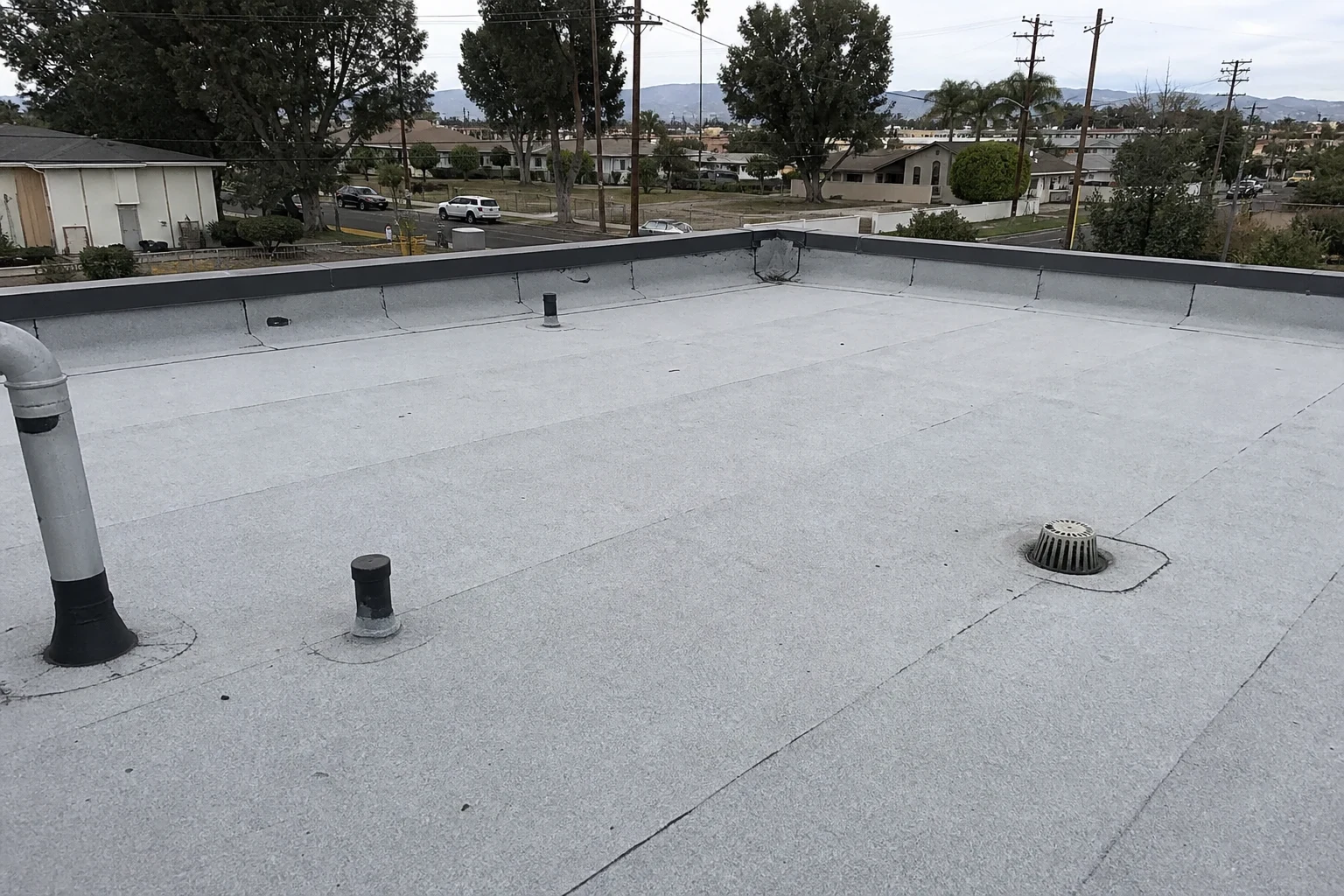
We clear and reset drains, rebuild scupper openings and add tapered material where low spots hold water. Fixing drainage is the single best thing you can do for a flat roof's lifespan.
Reflective roof coatings
On a membrane that is still sound, a cleaned and primed elastomeric coating can add years and cut heat on rooms below. We only recommend it when the surface underneath is dry and firmly adhered.
Flashing at walls and curbs
Parapet walls, AC stands, skylights and vent pipes are where most flat roof leaks start. We rebuild base flashing and counterflashing so the joint stays tight as the roof expands and contracts.
Full flat roof replacement
When the roof is past saving, we remove the old layers, check and replace damaged decking, and install a new system suited to your home. Where a flat section meets a pitched one, we tie the two together carefully.
Signs Your Flat Roof Needs Attention
Water standing two days after rain
Ponding means the drainage has changed or the deck has sagged. It speeds up wear on every material.
Blisters and bubbles
Trapped moisture or poor adhesion pushes the membrane up. Left alone, blisters crack open.
Cracked, alligatored surface
A web of cracks on built-up or coated roofs shows the top layer has dried out in the sun and stopped protecting what is below.
Stains near walls or AC units
Ceiling marks under a parapet or rooftop equipment usually point to failed flashing rather than the open field of the roof.
Soft spots underfoot
A spongy feel means water has reached the insulation or decking. That changes a repair into a bigger conversation, so it is worth catching early.
How a Flat Roof Job Runs
- 1
A free inspection on the roof
We walk the whole surface, probe seams, check drains and look at flashing around every penetration. You get photos of what we found and a free written estimate with each item listed.
- 2
Choosing repair, coating or replacement
We explain which option makes sense for the condition of your roof and how long each should serve you. If a repair will hold, that is what we quote.
- 3
Permit and preparation
For replacement work we pull the permit and confirm any energy code requirements for low-slope roofs. On the day, we protect walkways, plants and anything under the roof edge.
- 4
Installation and cleanup
We install the membrane or coating, then water-test drains and seams where practical. Debris is hauled away and the area around your home is swept and checked for fasteners.
- 5
Care notes for the years ahead
Before we leave, we show you what to watch: drains to keep clear, seams to check after winter rain, and when a recoat will likely be due.
What Shapes the Cost of Flat Roof Work
Every flat roof is priced from what we find on it, so your written estimate lists each part of the job. A coating or seam repair costs far less than a tear-off, which is one reason regular care pays off. Financing is available through Service Finance Company, subject to credit approval.
- Roof size and layers
- Square footage sets the base. Removing two or three old layers of built-up roofing adds labor and disposal.
- Condition of the deck and insulation
- Wet insulation or rotted decking has to come out before anything new goes down. We photograph it so you see exactly why it is on the estimate.
- Material choice
- Modified bitumen, TPO and coating systems differ in cost and expected service life. We walk you through the tradeoffs for your roof.
- Drainage corrections and penetrations
- Tapered insulation, new drains and rebuilt flashing at AC units or skylights each add to the scope.
- Access
- A low patio cover is simpler to work on than a second-story roof behind parapet walls with limited space for materials.
Flat Roofing Questions We Hear Often
Something not covered here? (310) 982-2274
Can my flat roof be coated instead of replaced?
Often, yes. If the membrane is still firmly stuck down and the insulation underneath is dry, a properly prepared coating can extend its life and reflect heat. If we find trapped moisture, a coating would only seal the problem in, and we will tell you so.
How long does a flat roof usually last?
It depends on the material, how well it drains and how it has been looked after. Roofs that shed water quickly and get their seams and drains checked regularly simply last longer. We give you a realistic expectation for your specific roof during the inspection.
Is some standing water normal?
A thin film that dries within a day or two after rain is common. Deeper puddles that linger longer point to a drainage issue worth fixing, since constant water wears the surface and adds weight to the deck.
Will you work with my insurance company?
We work directly with your insurance claim when damage is involved. We document what we find with photos and measurements and explain the process, while the adjuster makes the coverage decision.
How often should I have a flat roof checked?
Once a year is a sensible rhythm, ideally before the winter rains, plus a look after any strong storm. Clearing leaves from drains between visits makes a real difference. Our roof inspections page explains what a visit covers.
Let's Look at Your Flat Roof Before the Next Rain
We will check the surface, drains and flashing, then explain your options in writing. A small repair now often spares you a full replacement later.